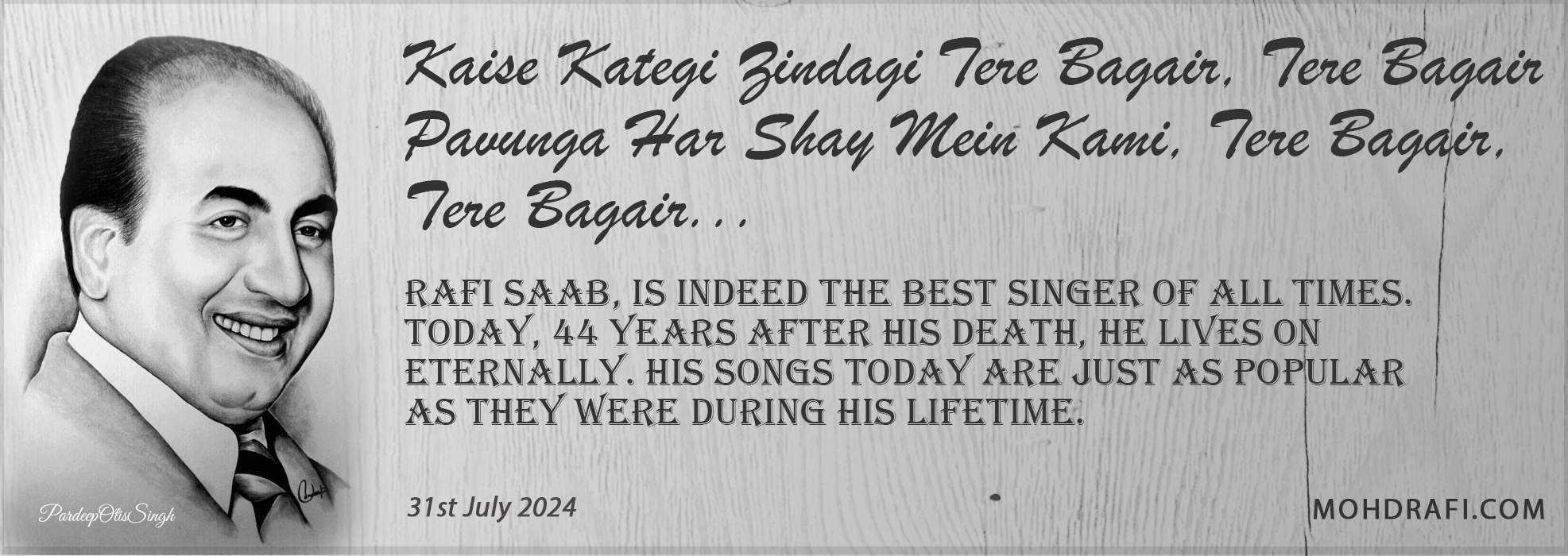
Rafi Sahab Remembered on His 101st Birth Anniversary – The Golden Voice That Defined Generations of Hindi Cinema
By Dr. Souvik Chatterji
Mohammed Rafi’s 101st birth anniversary is a heartfelt celebration of the golden voice that defined Hindi cinema, its greatest stars, and unforgettable melodies.
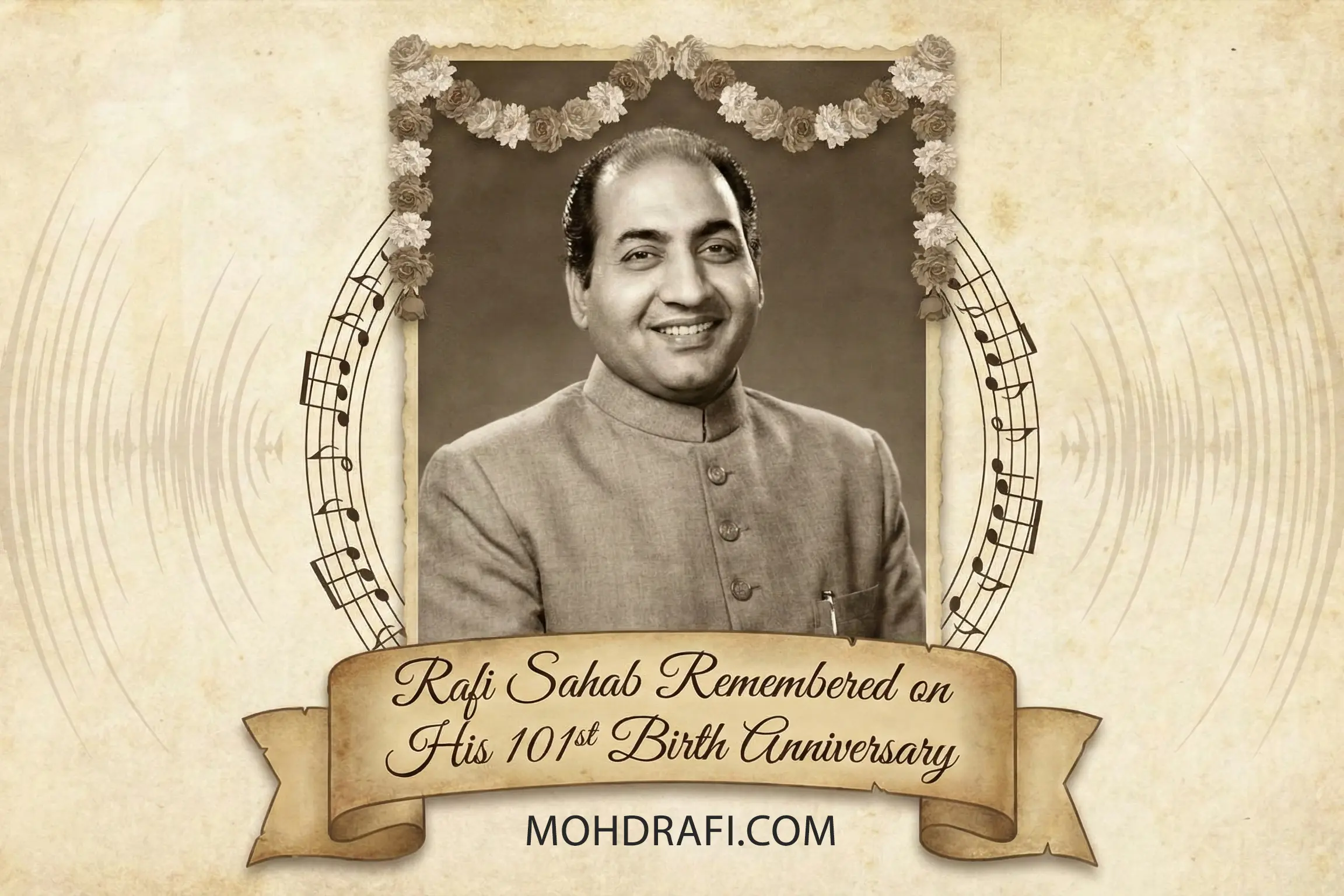
The immortal voice of Mohammed Rafi Sahab continues to resonate across the globe as we celebrate his 101st birth anniversary on December 24, 2025. Even more than four decades after his passing, his songs remain an inseparable part of India’s cultural heartbeat. Every leading actor from the 1940s to the 1970s owes some of their most iconic moments on screen to the magic of Rafi Sahab’s voice.
When we revisit the golden era of Hindi cinema, it becomes clear that the true soul of those decades was Rafi Sahab’s melodious voice — versatile, pure, and emotionally boundless. His songs lent power to love, faith, loss, and patriotism with equal grace, transforming every performance he touched into something eternal.
Landmark Songs and the Stars Who Shone Through His Voice
From Dilip Kumar to Rishi Kapoor, each legendary actor of Hindi cinema reached an artistic high point with Mohammed Rafi Sahab behind their most memorable songs. His ability to adapt to every actor’s personality was unique — playful for Shammi Kapoor, spiritual for Bharat Bhushan, romantic for Rajendra Kumar, and introspective for Dev Anand.
Dilip Kumar’s immortal classic Mughal-e-Azam (1960) featured Rafi Sahab’s patriotic anthem “Zindabad, aye mohabbat zindabad,” composed by Naushad Sahab — a song that still echoes in India’s cinematic archives.
Raj Kapoor, the great showman, found tenderness in Rafi’s voice through Sangam (1964), where the singer’s rendition of “Ki tum naraaz na hona” expressed affection in its purest form.
Rajendra Kumar immortalized romance through Mere Mehboob (1963), with the unforgettable “Mere mehboob tujhe meri mohabbat ki kasam.”
For Dev Anand’s introspective Guide (1965), Rafi Sahab sang “Din dhal jaye hai,” expressing longing and inner conflict with haunting sensitivity.
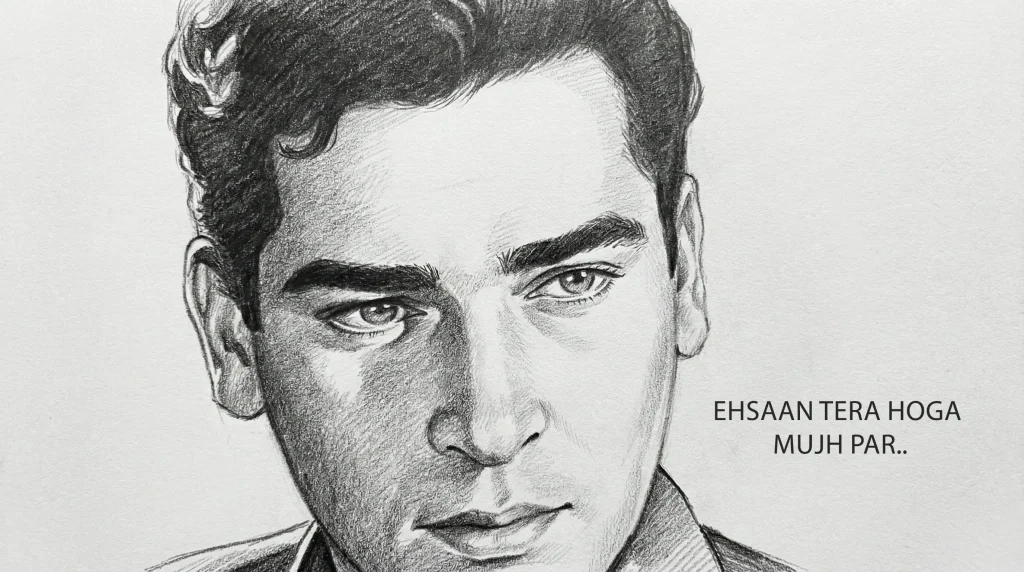
In Shammi Kapoor’s energetic Junglee (1961), “Ehsaan tera hoga mujhpar” revealed Rafi Sahab’s ability to balance intensity with softness.
Biswajeet’s Mere Sanam (1965) would be incomplete without “Pukarta chala hoon main,” a melody that captures Rafi’s effortless romantic charm.
Joy Mukherjee’s Love in Tokyo (1966) sparkled with “Le gayi dil gudiya Japan ki,” blending East and West in Rafi’s lively rendition.
For Pradeep Kumar in Taj Mahal (1963), Rafi delivered the eternal “Jo wada kiya woh nibhana padega,” a timeless promise set to Roshan’s stirring music.
Bharat Bhushan’s Barsaat Ki Raat (1960) gifted us “Zindagi bhar nahi bhoolegi woh barsaat ki raat,” perhaps one of the most poetic love songs ever sung.
Dharmendra’s Mera Gaon Mera Desh (1971) had the soothing “Kuch kehta yeh sawan,” while Jeetendra’s Farz (1967) featured the celebratory “Baar baar din yeh aaye.”
Raj Kumar’s Neel Kamal (1968) shone with “Tujhko pukare tera pyar,” and Sunil Dutt’s Mera Saaya (1966) had the heart-wrenching “Aap ke pehlu mein aakar ro liye.”
Guru Dutt’s Chaudhvin Ka Chand (1960) will forever be remembered for its title song — “Chaudhvin ka chand ho ya aftaab ho” — where Rafi’s voice elevated the lyrics to celestial beauty.
Balraj Sahni’s gentle grace in Bhabhi (1958) was mirrored in “Chal ud ja re panchi,” while Sanjeev Kumar’s Mausam (1975) featured the less-remembered gem “Chari re chari kaise gale mein pari.”
Rafi’s powerful and devotional numbers continued into the later decades as well — Rishi Kapoor’s Amar Akbar Anthony (1977) had “Shirdi wale Sai Baba,” a song that remains a spiritual favorite to this day.
Iconic Songs That Defined an Era
From Uran Khatola to Karz, every decade bore his extraordinary stamp. His patriotic, romantic, qawwali, classical, and dance songs all found perfection in emotion and structure.
- Dilip Kumar’s Uran Khatola (1956) had “Woh door ke musafir,” a Naushad classic that ruled the airwaves.
- Ajit’s Halaku (1956) gave us the immortal duet “Aja ke intezaar mein” with Lata Mangeshkar.
- Raj Kapoor’s Shree 420 (1955) soared with “Ramaiya vasta vaiya,” an anthem of hope sung by Rafi along with Mukesh and Lata.
- Bharat Bhushan’s Baiju Bawra (1952) highlighted Rafi’s divine reach through “O duniya ke rakhwale.”
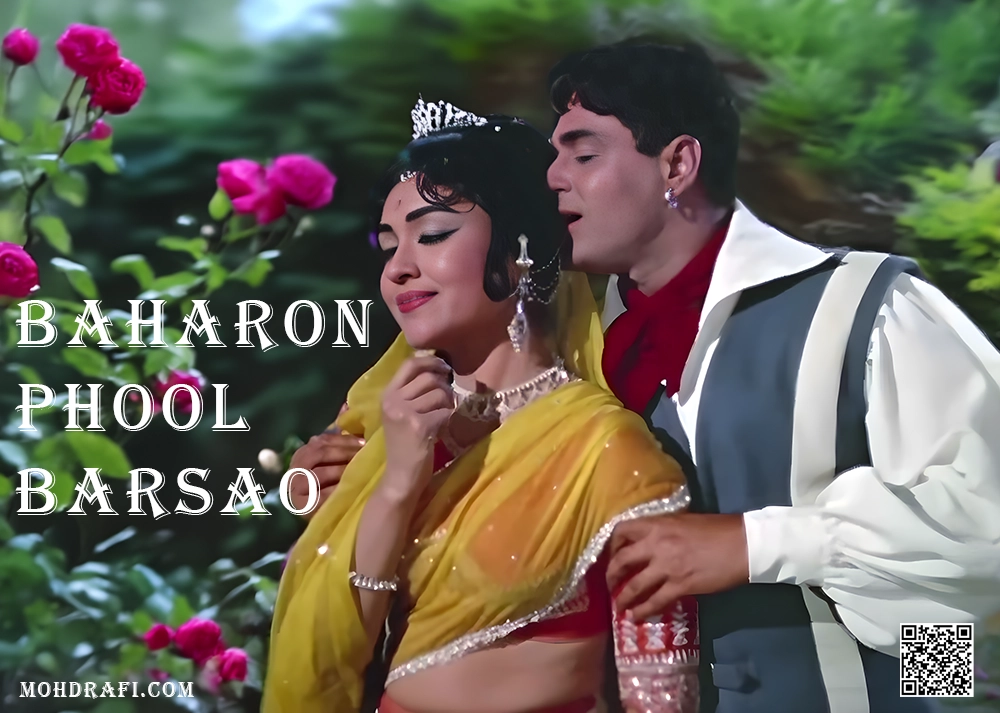
Rafi’s adaptability remained unmatched. Romantic tunes like Aarti’s “Ab kya misaal doon” (1962), majestic scores like Suraj’s “Baharon phool barsao” (1966), or Shammi Kapoor’s lively “Yeh chaand sa roshan chehra” (Kashmir Ki Kali, 1964) — all underscored his vocal brilliance.
Jeetendra’s “Baar baar din yeh aaye” in Farz (1967), Sanjeev Kumar’s “Tumhari zulf ke saaye mein” (Naunihal, 1967), and Chandrashekhar’s soulful “Subah na aaye shaam na aaye” (Cha Cha Cha, 1963) — each was a masterclass in tonal control.
In the 70s, Rafi gave Rajesh Khanna the flirtatious “Gulabi aankhen” in The Train (1971), Tariq the iconic “Kya hua tera wada” (Hum Kisi Se Kum Nahin, 1977), and Rishi Kapoor the evergreen “Dard-e-dil, dard-e-jigar” (Karz, 1980).
Even late in his career, he sounded as youthful and divine as ever — a testimony to vocal immortality.
Music Directors Who Rose With His Voice
Mohammed Rafi wasn’t just a singer — he was a creative force who shaped the destinies of countless composers. Nearly every celebrated music director between the 1940s and 1970s achieved career peaks through his collaborations.
Shankar–Jaikishan, Naushad, Roshan, O.P. Nayyar, Ravi, Khayyam, Salil Chowdhury, Madan Mohan, and Laxmikant–Pyarelal all acknowledged that Rafi’s voice brought their compositions to life.
- Shankar–Jaikishan received nine Filmfare Awards, many powered by Rafi’s timeless renditions — from “Jane kahan gaye” (Dil Apna Aur Preet Parai, 1961) to the sparkling melodies of Suraj (1967).
- Naushad Sahab’s classical excellence in Baiju Bawra (1952) found its soul in Rafi’s bewitching delivery of “Man tarpat Hari darshan ko aaj.”
- Roshanlal Nagrath reached melodic perfection in Taj Mahal (1963) through “Jo wada kiya woh nibhana padega.”
- O.P. Nayyar, known for his peppy compositions, rode to stardom with hits from Naya Daur (1957) like “Ude jab jab zulfen teri” and “Saathi haath badhana.”
- Salil Chowdhury’s haunting Madhumati (1958) became legendary with Rafi’s “Tute hue khwabon mein.”
- Ravi Shankar Sharma created immortal melodies such as “Husnwale tera jawab nahin” (Gharana, 1962) and “Chaudhvin ka chand” (Chaudhvin Ka Chand, 1960).
- Madan Mohan’s “Tumse kahoon ek baat” (Dastak, 1970) and many ghazal-style compositions bore Rafi’s emotional depth.
- Laxmikant–Pyarelal’s Dosti (1964) brought Rafi national glory with “Chahunga main tujhe” and “Rahi manwa dukh ki chinta.”
- R.D. Burman’s youthful rhythms found their best interpreter in Rafi too — from “Kya hua tera wada” to “Dard-e-dil.”
It’s said that composers trusted Rafi’s instinct so much that he often suggested subtle variations that improved the final recording — a rare collaboration between singer and composer built on mutual respect and understanding.
The Voice That Outlived Time
Rafi Sahab’s influence transcends generations. Even young artists in 2025 continue to cover his songs, study his breath control, diction, and his ability to merge emotion with technical flawlessness.

The BBC Asia Network once voted “Baharon phool barsao” the most popular Hindi song in a poll marking 100 years of Indian cinema — proof that Rafi’s magic still captivates listeners worldwide.
A CNN-IBN survey in 2013 named him the Greatest Voice of Hindi Cinema, while Hero Honda-Stardust in 2001 declared him the Best Singer of the Millennium.
In today’s era of digital remixes and AI-enhanced vocals, Rafi’s legacy serves as both a reminder and a standard — showing that true artistry lies not in technology but in emotion and soul. His songs continue to feature in digital music charts, cover festivals, and film tributes, reaffirming his timelessness.
Rafi’s Enduring Presence in Modern Music
As we mark his 101st year, institutions, fan clubs, and musicians across India and abroad organize special concerts, radio retrospectives, and charity events in his name. Social media overflows with video tributes and new interpretations of his evergreen songs. Younger singers still consider mastering a Rafi classic a badge of honor, while music schools use his recordings as benchmarks for perfect pitch and pronunciation.
In film award shows and reality programs, Rafi Sahab’s influence remains powerful. Contestants continue to choose his songs to showcase range and expression — from pure romance to sufi devotion. The charm of his music bridges generations effortlessly; grandparents and grandchildren alike hum his melodies with equal affection.
Even in today’s Bollywood, where remixes often revive classics, Rafi Sahab’s name draws instant reverence. His songs in new cinematic contexts — whether gently reimagined or simply played over flashbacks — signify emotion, purity, and nostalgia.
An Eternal Legacy
It has been over a century since Mohammed Rafi was born in Kotla Sultan Singh, Punjab, yet his voice feels as alive as ever. He sang over many songs in multiple languages, each carrying its own distinct emotion. His humility, professionalism, and compassion made him not only a musical icon but also a moral touchstone for artists.
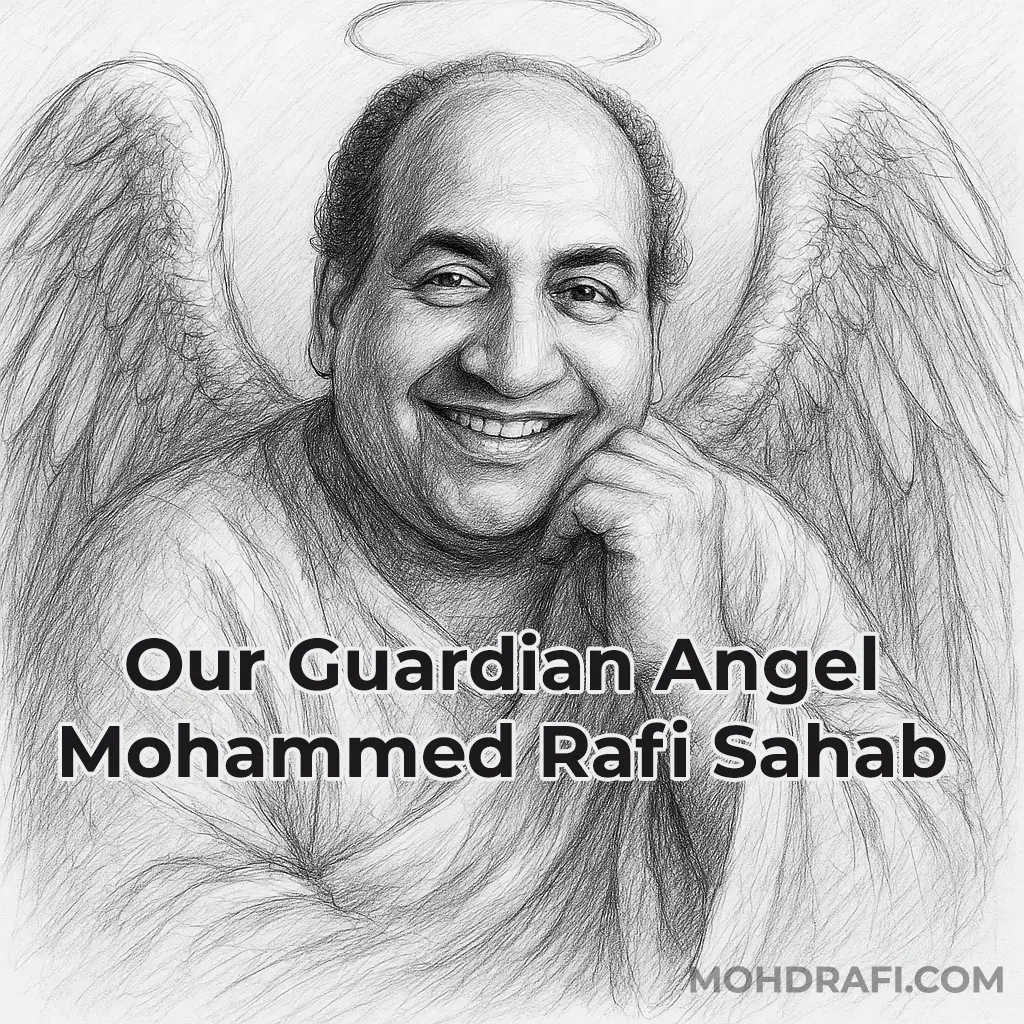
No matter how far popular music evolves, Rafi Sahab’s artistry stands as the blueprint of excellence — uniting classical rigor with human warmth, and spiritual grace with cinematic storytelling.
As India and music lovers worldwide celebrate his 101st birth anniversary today, we are reminded that Mohammed Rafi was not merely a singer — he was a phenomenon, a rare confluence of divine gift and disciplined artistry. His songs are not just heard; they are felt. They are woven into the country’s emotional fabric — playing everywhere from temples to weddings, from concert halls to quiet radio nights.
Even in this digital age, the magic of Rafi Sahab remains untouched — echoing through every corner where melody reigns supreme. Truly, the voice that defined Indian cinema still defines what it means to move the human heart.

Post your Comment on Facebook